Email separation means choosing different addresses for different levels of trust instead of giving one identity to every website. It reduces unnecessary exposure of your primary address and makes unwanted mail easier to contain, but it does not make suspicious messages safe.
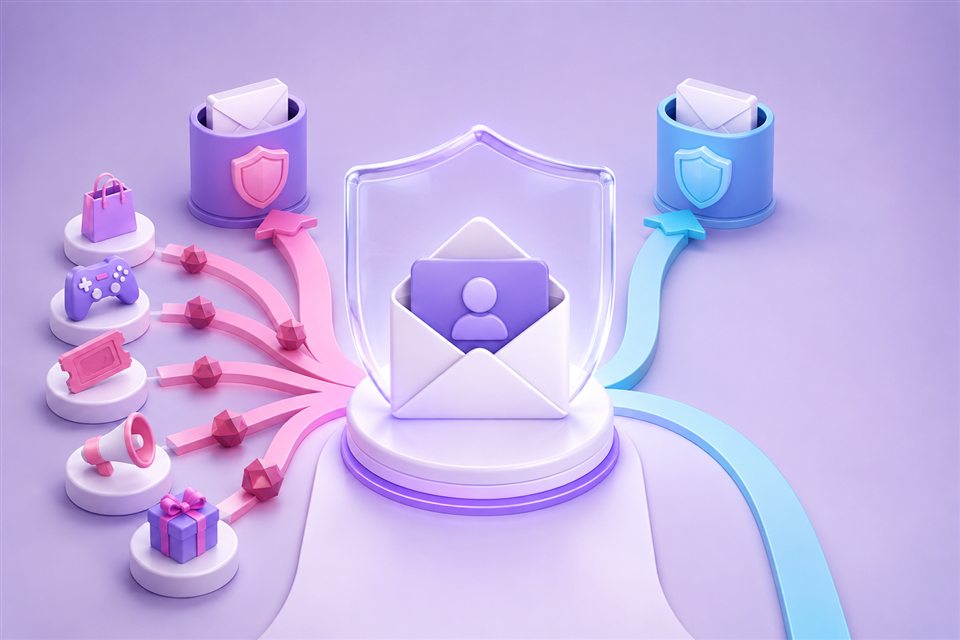
Use a simple three-level model
Keep a high-trust address for banking, government, healthcare, payroll and core account recovery. Use a durable secondary address for services you expect to keep, such as subscriptions or communities. Use a separate receive-only inbox for low-risk verification, product testing and one-off resources.
The goal is not secrecy for its own sake. It is data minimisation: an unrelated website cannot expose an address it never received. If one low-trust list is breached or sold, the resulting messages remain separated from the inbox that controls your important accounts.
Decide before entering an address
- Ask whether the account will hold money, identity documents or irreplaceable data.
- Check whether you will need to send replies or contact human support.
- Consider how password recovery will work months from now.
- Use a unique password regardless of which address tier you choose.
- Record durable accounts in a password manager rather than relying on memory.
Separation reduces exposure, not all risk
A separate inbox cannot verify that a sender is genuine, stop malware or protect a reused password. Treat unexpected links and attachments cautiously. Confirm sensitive requests by opening the service through a known bookmark instead of following an email link.
Temporary-email domains may be rejected by some services. That is the provider's choice and should not be bypassed. Use a permanent address when reliable recovery, contractual notices or two-way communication matters.
Frequently Asked Questions
Does a separate email address make me anonymous?
No. Websites may use other account, payment, browser or network information. Email separation only limits reuse of one address.
Which accounts should use my primary inbox?
Reserve it for high-trust services whose loss could cause serious financial, identity or recovery harm.
Can email separation stop phishing?
No. It can make unexpected mail easier to notice, but you must still verify senders, links and requests.
When should I delete a low-trust inbox?
Delete it after confirming that no account still relies on it for access, receipts or recovery.
The practical takeaway
Choose the address according to the consequence of losing it. Separation works best alongside unique passwords, two-factor authentication and careful recovery planning. Read our Safety guide before using any temporary inbox for an unfamiliar service.